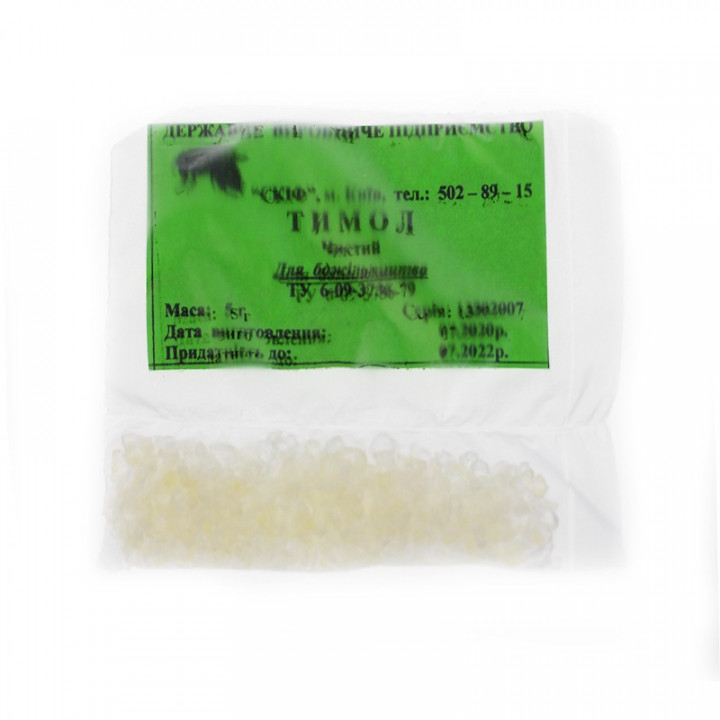
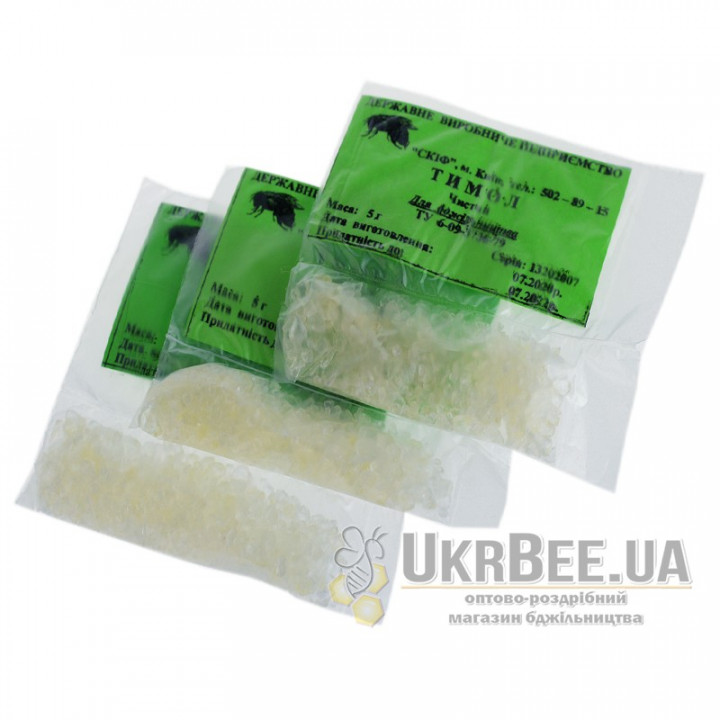
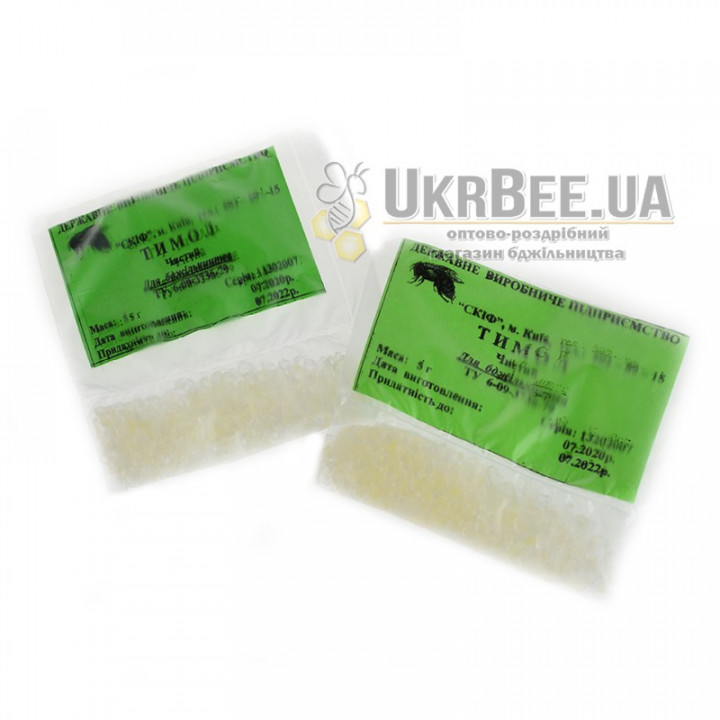
Thymol 5g
Thymol may be supplied as white crystals or a white powder and has a characteristic odour. The product dissolves well in ether, fatty oils, alcohol, chloroform and glacial acetic acid.
Properties of the product: Thymol has pronounced acaricidal, bactericidal, nosemacidal and fungicidal properties. Varroosis and acarapidosis in bees are direct indications for using the product. Thymol is also used for the prevention of nosema, chalkbrood and foulbrood diseases of bee brood.
Dosage and application of thymol: The product is used during the autumn build-up of bee colonies and in spring after the cleansing flight.
1. Thymol is sprinkled over the top bars of the frames in the brood nest at a rate of 2.5 g per colony occupying 10 inter-frame spaces. For colonies with a moderate or low level of infestation, Thymol should be sprinkled twice at 7-day intervals. In cases of heavy colony infestation, treatment should be carried out 3 times at 4-day intervals. After 2-3 days following treatment, the product in sachets is placed in the colony; the temperature in the hive must not exceed 27 °C. After treatment, it is not recommended to open the hive for 48 hours, as a fresh influx of air will sharply reduce the concentration of the product’s therapeutic vapours.
2. The product may be used in cloth bags measuring 10 x 10 cm. A bag containing 10-15 g of the product (per colony) is placed near the rear wall of the hive, on top of the brood nest, for 12 days. After 5 days, the bag is kneaded and topped up with the product as it evaporates. It is not recommended to open the hive for 48 hours after treatment, as a fresh influx of air will sharply reduce the concentration of the product’s therapeutic vapours. Bees remove the product themselves if it comes into contact with open brood. The effect of thymol on female mites gives positive results, with reduced fertility and general toxic poisoning observed. It is recommended to use Thymol at temperatures not higher than 27 °C; otherwise, the product may not show its full effect.
3. Thymol may be used as a medicated feed with sugar syrup at 50% concentration, at 100 ml per frame covered with bees. The medicated syrup is given in the evening, placed in top feeders or in empty combs installed in the brood part of the nest. Feeding bees with syrup containing the product is carried out 4 times at intervals of 3-4 days.
Preparation of the product solution: 3 grams of thymol should be dissolved in 25 litres of sugar syrup. To prepare the sugar syrup, first dissolve the Thymol in hot water, then add the required weighed amount of sugar.
4. Thymol can also be used to prepare medicated candy for bees. To prepare this candy, thoroughly mix 3 g of thymol with 10 kg of candy. This candy should be given to bees as feed at a rate of 40 g of candy per frame covered with bees. Preventive treatment is carried out by feeding the medicated candy once. When treating bees, it should be fed 3 times, at intervals of 6-7 days.
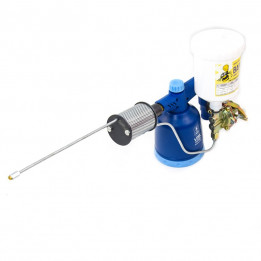
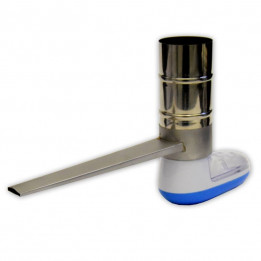
The most effective use of Thymol for treating bees against mites is its application with a Varomor smoke gun. You can read more about this method here.
Special instructions for using thymol: Treatment of bees with the product should be stopped one week before honey extraction. Do not treat weak bee colonies consisting of fewer than three full inter-frame spaces of bees.
Precautions: During treatment with the product, avoid getting the solution into the respiratory tract and eyes. The product causes mild irritation on contact with skin and severe irritation on contact with mucous membranes. If the product enters the bloodstream in large doses, it can lead to death due to paralysis of the heart.
Store the product in a dry place protected from direct sunlight, at room temperature. The product packaging must be tightly closed. Shelf life: 2 years from the date of manufacture.